The sun beats down relentlessly across Tampa Bay for the better part of every year, yet most households are still handing hundreds of dollars a month to the utility company. Electricity rates keep climbing. Storm seasons keep intensifying. And the technology to flip that equation in a homeowner’s favor has never been more accessible.
Solar installation in Tampa Bay has gone from a niche choice for early adopters to one of the smartest financial moves a property owner can make in 2026. Whether a home sits in Tampa, Clearwater, St. Petersburg, Brandon, or any community across Pinellas and Hillsborough Counties, the fundamentals are the same: abundant sunlight, rising utility costs, and a financing landscape that makes going solar possible without draining savings accounts.
This guide covers what Tampa Bay homeowners need to know: solar panel costs, realistic savings, local incentives, the installation process from start to finish, and how to choose a solar company worth trusting.
Why Tampa Bay Is One of Florida’s Best Regions for Solar Installation
Sunshine Levels and Solar Potential in Tampa Bay
Florida didn’t earn the nickname ‘Sunshine State’ by accident, and Tampa Bay sits right in the heart of the state’s solar sweet spot. The region receives some of the highest peak sun hours per day in the country, and solar panels generate power based on sunlight intensity, not just daylight hours.
Most of the northeastern United States gets three to four peak sun hours daily. Tampa Bay averages five to six or more peak sun hours for much of the year, consistently outperforming most of the country. Production naturally dips somewhat in the winter months, but even then, Tampa Bay’s output remains strong by national standards. Even during Florida’s rainy season, afternoon storms typically pass quickly, leaving panels producing solid output through the morning and early evening hours.
The coastal geography helps too. Sea breezes keep panel temperatures from spiking, which matters because solar panels lose efficiency in extreme heat. A cooler panel is a more efficient panel.
Rising Electricity Costs in the Tampa Bay Area
Duke Energy and Tampa Electric (TECO) customers have watched rates climb steadily. Residential electricity rates in Florida have risen faster than the national average, and utility analysts don’t see that trend reversing. Infrastructure upgrades and grid modernization all get passed along to ratepayers.
The average Tampa Bay household runs air conditioning constantly for months on end. Homeowners who installed solar a few years ago locked in their energy costs and have watched neighbors’ bills grow while their own stayed flat, or disappeared entirely. That contrast is what’s driving the surge in residential solar Tampa Bay installations.
Growing Demand for Residential Solar in Tampa Bay
Florida ranks among the top states for solar capacity additions, and the Tampa Bay market has been a significant contributor. Local adoption has accelerated for several reasons beyond just economics:
- Post-hurricane energy resilience has become a genuine concern for families across Pinellas and Hillsborough Counties.
- Battery storage technology has matured, making solar-plus-storage a practical, mainstream option.
- Florida law limits HOA restrictions on solar installations, clearing friction that once slowed adoption.
How Much Does Solar Installation Cost?
Average Solar Panel Cost in Tampa Bay, FL
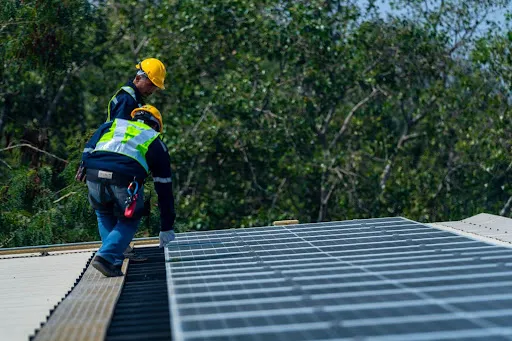
Most Tampa Bay homes are served by systems sized between 6 and 10 kilowatts, depending on energy usage and roof space. After applying the federal Investment Tax Credit, the net cost drops considerably, and financing options, including PACE programs, can eliminate any upfront payment entirely.
Solar panel manufacturing costs have dropped dramatically over the past decade, and those savings have been passed through to residential installations. Getting a custom quote matters because home orientation, shading, roof pitch, and utility rate all factor into what size system makes sense for a specific property.
Factors That Affect Solar Installation Costs
Not every home costs the same to equip with solar. The main variables:
- Roof orientation: South-facing sections produce the most power in Florida. East and west-facing sections work well when the south-facing space is limited.
- Shading: Trees, chimneys, or dormers can cut panel output significantly. Installers may use microinverters or power optimizers to minimize shading losses.
- Panel quality: Tier 1 panels from established manufacturers carry stronger 25-year performance warranties than budget alternatives.
- Inverter type: String inverters are most economical for unshaded roofs. Microinverters cost more but optimize each panel independently on complex roof lines.
Estimated Payback Period for Tampa Bay Solar Systems
Tampa Bay homeowners pay back faster than in most U.S. markets, thanks to high solar irradiation and strong net-metering credits. After that payback window, the system produces essentially free electricity for the remainder of its lifespan, which spans decades with proper maintenance.
Financial Incentives for Solar Panels in Tampa Bay
Federal Solar Investment Tax Credit (ITC)
The federal solar Investment Tax Credit (ITC) allows homeowners to deduct 30 percent of the total solar installation cost directly from their federal income taxes. This is a dollar-for-dollar reduction in tax liability, not just a deduction from taxable income. That distinction matters: a $6,000 credit cuts the actual tax bill by $6,000, not the income used to calculate it.
The 30 percent rate is available now, but its future for residential installations is not guaranteed beyond 2025. Congress had not confirmed an extension at the time this guide was written, which means homeowners who move sooner are in the strongest position to capture the full credit. To claim it, homeowners must own the system outright rather than lease it, and must carry sufficient federal tax liability to absorb the credit amount.
Local Solar Financing Options
The financing landscape for solar in Tampa Bay has expanded significantly. The most common options homeowners encounter:
- Solar loans: No-money-down options are widely available from credit unions, banks, and specialty lenders. Homeowners start saving on electricity bills from day one.
- PACE financing: Repayment attaches to the property through the annual tax bill rather than to the homeowner personally. Approval focuses on property equity rather than credit score, making it accessible for many homeowners who wouldn’t qualify for conventional financing. Eligibility typically requires sufficient home equity and no recent bankruptcy. Programs are active across Florida counties through providers like FPFA.
- Solar leases and PPAs: A solar company owns the panels and sells the electricity at a fixed rate. The homeowner doesn’t pay for the system, but also doesn’t capture the tax credit.
Utility Net Metering in Tampa Bay
Net metering is what happens when solar panels produce more electricity than the home is using. That excess flows back to the grid, and the utility credits the homeowner’s account for it.
Duke Energy and TECO both offer net metering to residential solar customers. Many Tampa Bay homeowners see net-zero or near-zero utility bills during spring and fall when air conditioning demand drops and solar production is high. That said, net metering in Florida has evolved.
Newer installations may be subject to caps or additional fees depending on the utility and enrollment date, and full retail rate credits are being phased out for new customers at some utilities. Homeowners who connect sooner are more likely to lock in better credit terms before further changes take effect. A local installer familiar with current Duke Energy and TECO programs can clarify exactly what applies to a specific property.
How the Solar Installation Process Works in Tampa Bay
Home Solar Evaluation and System Design
Every legitimate solar installation starts with a thorough home evaluation. The installer examines roof condition first, confirming it can support panels for the next 25 to 30 years. A roof nearing the end of its serviceable life needs to be addressed before solar is installed on top of it.
Energy consumption analysis follows. Reviewing 12 months of utility bills gives the installer a clear picture of how much electricity the home uses and when. The system gets sized to offset as much of that usage as makes financial sense, given roof space and budget. Good installers provide written production estimates showing expected monthly and annual output.
Permits and Approvals
Solar installation in Tampa Bay requires building permits from the relevant municipality, whether that’s the City of Tampa, Hillsborough County, Clearwater, St. Petersburg, or another jurisdiction. Requirements generally include structural documentation confirming the roof can handle added weight, plus electrical documentation showing the system meets code.
HOAs cannot prohibit solar installations under Florida law, though they can regulate panel placement to minimize street visibility. Utility interconnection approval is the final step before activation, typically taking a few weeks after installation is complete.
Solar Panel Installation and Activation
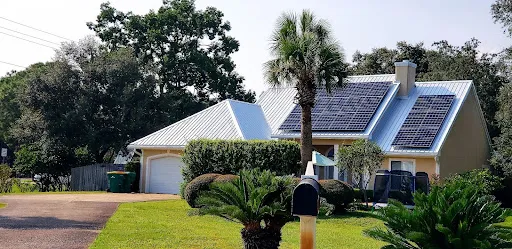
Physical installation on a typical Tampa Bay home is completed by a professional crew who mounts the racking system, runs conduit, and secures panels to the roof. Inside, the inverter and monitoring equipment connect to the electrical panel.
After installation, a municipal inspector verifies that the work complies with the code. The utility then installs a bidirectional meter that tracks both consumption and production. From first consultation to first bill credit, homeowners should expect the full process to take several weeks, accounting for permitting, inspections, and interconnection approval.
Choosing the Best Tampa Bay Solar Company
What to Look for in a Tampa Bay Solar Installer
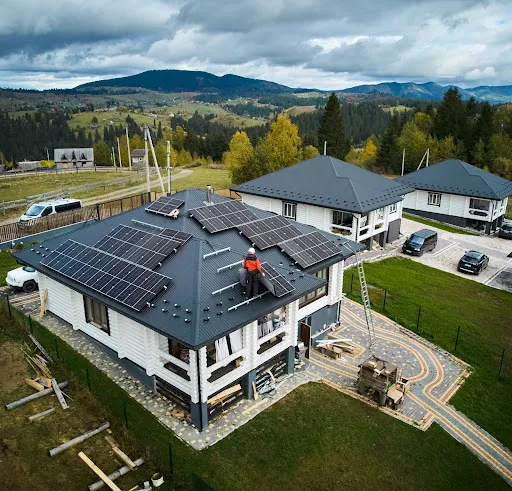
Licensing is non-negotiable. Florida requires solar installers to hold the appropriate contractor licenses, which are verifiable through the Department of Business and Professional Regulation. Electrical contractor licensing covers wiring work; roofing experience matters for roof penetrations, ensuring they are done correctly without creating future leak points.
Beyond licensing, look for:
- Current insurance certificates for both general liability and workers’ compensation. Ask for certificates, not verbal confirmation.
- Local Florida installation experience. Hurricane code compliance, coastal wind exposure requirements, and local utility interconnection processes have nuances that out-of-state companies often miss.
- Clear warranty documentation covering panels, inverter, and workmanship separately.
Questions to Ask a Solar Company Before Signing
Before committing to any installer, homeowners should ask:
- What does the production estimate assume, and is it provided in writing?
- Who handles permitting and utility interconnection, and is that included in the quoted price?
- What happens if production doesn’t meet the estimate?
- What are the total financing costs over the full loan or PACE term, not just the monthly payment?
Importance of Hiring a Local Tampa Bay Solar Company
Local companies know the specific permit requirements for Tampa, Hillsborough County, Clearwater, and St. Petersburg in ways that national brands operating through subcontractors often don’t. They’ve worked with Duke Energy and TECO on interconnection approvals and know how to move that process efficiently.
Hurricane-resistant installation practices matter more in Tampa Bay than in most markets. Local installers know the wind uplift requirements for Pinellas and Hillsborough Counties and install racking systems rated for Florida’s wind loads. When service or warranty issues arise years later, a local company is reachable and accountable.
Guardian Home operates throughout Tampa Bay, holding triple contractor licenses for building, roofing, and electrical work. The same licensed team handles solar and roofing as an integrated service, with deep familiarity with local building departments and utility requirements.
How Much Can Tampa Bay Homeowners Save With Solar?
Estimated Monthly Energy Savings
A properly sized solar system in Tampa Bay offsets 70 to 100 percent of a home’s electricity usage. The savings grow over time as utility rates continue to rise while the solar system’s output remains consistent. Spring and fall tend to produce the highest net-metering credits, while summer production offsets heavy air-conditioning loads.
Long-Term Financial Benefits of Solar
Protection against rising utility rates may be the most underrated financial benefit of solar. A homeowner who installs today isn’t just saving on this year’s bills. They’re locking in dramatically lower energy costs for decades, regardless of where utility rates go.
Property values increase alongside solar installations in Florida’s market, where buyers understand the long-term savings. Homes with existing solar attract buyers who recognize the value of energy efficiency. Research consistently finds solar adds measurable value at resale.
Environmental Impact of Residential Solar
A solar installation in Tampa Bay offsets thousands of kilograms of carbon dioxide annually. Over the full system’s lifespan, that’s equivalent to planting thousands of trees or permanently removing cars from the road.
For coastal communities throughout Tampa Bay, those environmental benefits hit close to home. Sea-level concerns, storm intensity, and water-quality issues all relate to carbon emissions in ways that Tampa Bay residents experience directly.
Is Solar Installation Worth It in Tampa Bay in 2026?
The case for solar in Tampa Bay has never been stronger, and the math backs it from multiple directions. Upfront costs have fallen dramatically while incentives remain generous. Utility rates have risen while panel prices have dropped. Financing options have multiplied while approval processes have gotten easier.
The 30 percent federal tax credit is available now, but its future for residential installations is uncertain. Congress has not confirmed an extension beyond 2025, and waiting to see what happens means potentially missing it entirely. Tampa Bay’s net metering programs remain available, though utilities have begun adjusting terms for new customers. Enrolling sooner gives homeowners the best chance of locking in favorable credit rates before further changes take effect.
Beyond the numbers, energy independence resonates increasingly with Tampa Bay homeowners who’ve watched extended outages follow recent hurricane seasons. Battery-paired solar systems keep lights and refrigeration running when the grid goes down, and in Florida, that scenario isn’t theoretical. It happens every storm season.
Residential solar installations in Tampa Bay continue to accelerate because the technology works, the financial case is solid, and the installation process has become routine for experienced local contractors.
Frequently Asked Questions About Solar Panels in Tampa Bay
Ready to Go Solar in Tampa Bay?
The right solar system starts with a professional assessment of your specific home: roof orientation, energy usage, shading, and financing goals. Guardian Home serves Tampa, Clearwater, St. Petersburg, Brandon, and communities throughout Pinellas and Hillsborough Counties. Our licensed team handles every step from design through activation, including permitting, inspections, and utility interconnection.
Call us today to schedule your free solar consultation. No pressure. No commitments. Just clear answers about what solar looks like for your home.